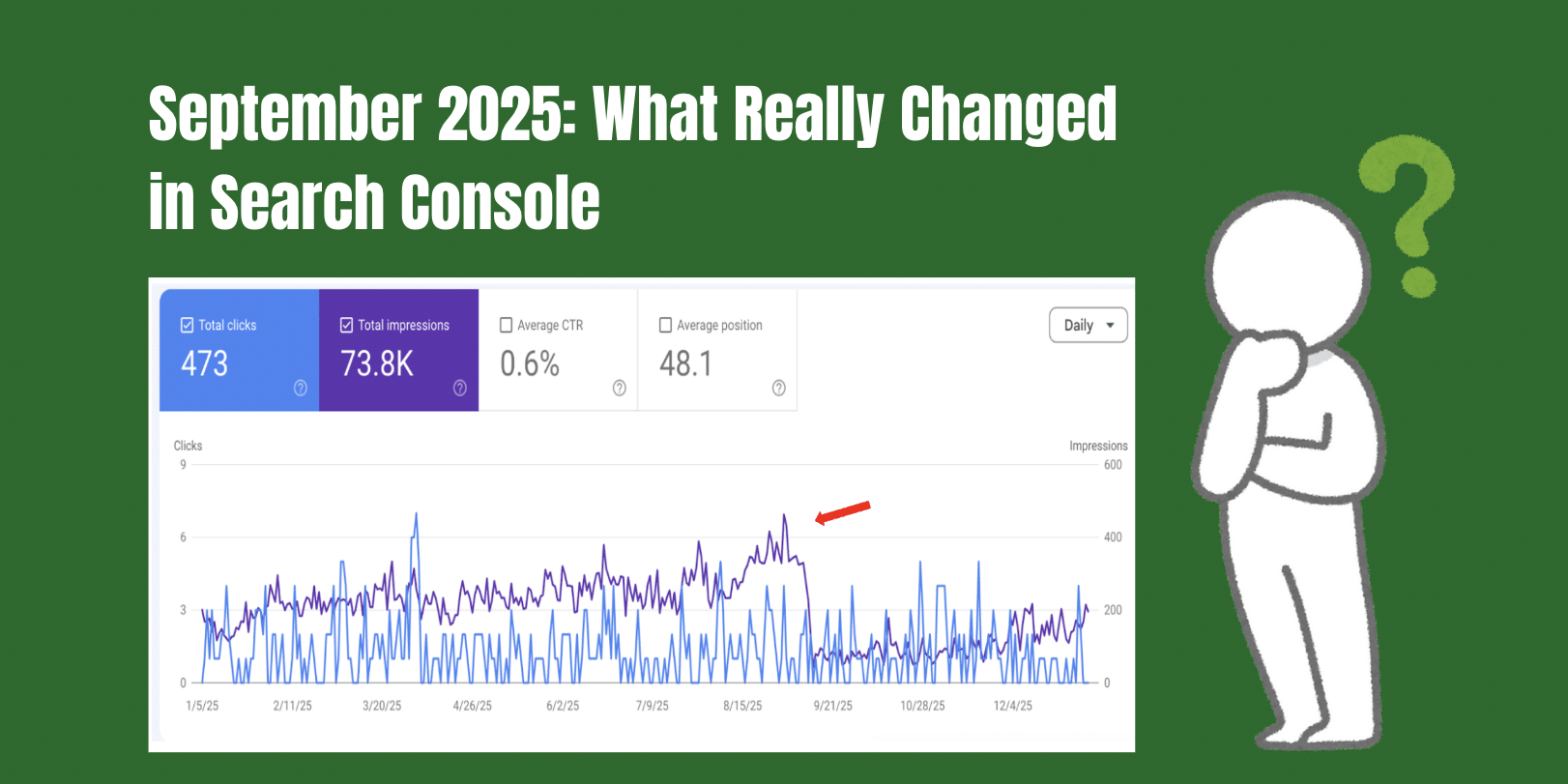
September 2025 marked one of the most misunderstood months in recent SEO history. While many site owners and SEO teams initially panicked over dramatic drops in impressions and visibility, the reality was more nuanced. This was not a single “ranking update” in the traditional sense, but rather a structural change in how Google reports and exposes search data, primarily through Google Search Console (GSC), combined with ongoing algorithmic refinements across Search.
The result? Confusion, false alarms, and a critical reminder that data interpretation is now as important as rankings themselves.
This article breaks down what actually happened, why Google made these changes, how they affect your reporting and strategy, and what SEOs should do next.
What Happened to Google Search Console in September 2025
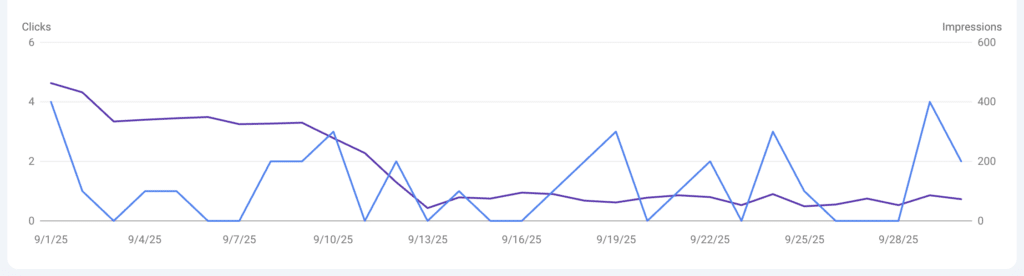
At a high level, September 2025 introduced:
- A fundamental change in how impressions are calculated and reported in Google Search Console
- The effective removal of the long-standing &num=100 parameter, which many SEO tools relied on
- Widespread impression and visibility drops that were reporting-related, not performance-related
- Continued algorithmic volatility driven by Google’s quality, intent, and AI-driven search evolution
Understanding the distinction between measurement changes and ranking changes is essential. Many sites didn’t lose visibility; they lost reported visibility.
The Core Change: How Google Search Console Now Counts Impressions
The End of &num=100
For years, Google allowed search results to be loaded with a &num=100 parameter, effectively exposing up to 100 organic results in a single request. While most users only ever interacted with the top 10–20 results, this parameter played a major behind-the-scenes role in:
- Impression reporting in Search Console
- Rank tracking and visibility metrics in third-party SEO tools
- Large-scale SERP analysis and scraping
In September 2025, Google removed or restricted this functionality.
What This Means for Search Console
Search Console impressions are now more tightly tied to actual, user-visible result sets, rather than extended result pages. As a result:
- URLs ranking beyond the most commonly viewed results no longer generate impressions in the same way
- Long-tail queries and low-ranking URLs appear to “disappear” from impression data
- Total impression counts dropped sharply for many sites, often by 70–90%
Crucially, this does not mean traffic collapsed.
Why Impression Drops Were So Severe (and So Misleading)
Search Console impressions have always been a proxy metric, not a direct measure of user engagement. The September update exposed just how fragile that proxy had become.
Before September 2025
- A page ranking at position 47 could still generate impressions
- A keyword with minimal real-world exposure could inflate impression counts
- SEO tools relied on extended SERP fetching to estimate “visibility.”
After September 2025
- Only results within realistic, user-engaged ranges are counted
- Impression inflation from deep rankings is effectively removed
- Visibility metrics now skew heavily toward top-ranking content
This caused two common (but incorrect) conclusions:
- “Our SEO performance collapsed overnight.”
- “Google penalized our site.”
In most cases, neither was true.
The Knock-On Effect: Rank Tracking and SEO Tools
Because many SEO platforms relied on #100 to build their datasets, September 2025 necessitated widespread recalibration across the industry.
What Changed for SEO Tools
- Visibility indices dropped sharply across entire markets
- Historical trend lines appeared “broken.”
- Rankings beyond the top 20 became less reliable or disappeared entirely
This created a temporary disconnect between:
- What SEOs were seeing in tools
- What users were actually experiencing in search
Over time, most platforms adjusted their methodologies, but September data remains an anomaly in many dashboards.
How This Intersects with Google’s Broader Algorithm Direction
The Search Console reporting change did not happen in isolation. It aligns closely with Google’s longer-term strategic goals.
Google Is De-Emphasising Passive Visibility
Impressions alone no longer reflect meaningful presence in search. Instead, Google is increasingly prioritising:
- Intent satisfaction
- User engagement
- Contextual relevance
- AI-augmented result formats
This shift makes sense in a world where:
- AI Overviews and summaries reduce the need to scroll
- Fewer organic results receive meaningful attention
- Search is becoming more conversational and task-oriented
In that environment, counting impressions for results that no one realistically sees adds little value.
What Metrics Matter More After September 2025?
With impressions now constrained, SEOs must adjust how they measure success.
1. Clicks Over Impressions
Clicks remain the most reliable indicator of real search demand and performance. If clicks are stable, impression drops are likely cosmetic.
2. Average Position (With Context)
Average position still matters, but only within meaningful ranking ranges (generally top 20). Deep-ranking averages are now largely irrelevant.
3. Query Intent Coverage
Instead of chasing volume-heavy keywords, focus on:
- High-intent queries
- Conversion-aligned search terms
- Queries that surface rich results or AI summaries
4. Multi-Source Validation
Search Console should no longer be used in isolation. Pair it with:
- Google Analytics
- Server log analysis
- Paid search impression share
- SERP feature tracking
Strategic SEO Adjustments Going Forward
The September 2025 update reinforces several long-term SEO truths:
Stop Optimizing for Invisible Rankings
If a page ranks but is never clicked or even seen, its SEO value is limited.
Focus on Depth, Not Breadth
Google’s systems increasingly reward:
- Comprehensive topic coverage
- Clear expertise and authority
- Content that satisfies follow-up questions
Align With AI-Driven Search
As AI summaries and generated answers expand, SEO strategies must evolve toward:
- Entity clarity
- Structured content
- Clear, extractable insights
Final Thoughts: September 2025 as a Turning Point
The September 2025 Search Console update will likely be remembered more for what it revealed philosophically than for what it changed technically.
Google is telling us clearly that:
- Not all visibility is valuable
- Not all impressions are meaningful
- SEO success must be measured by impact, not scale
For teams willing to adapt, this shift brings clarity. For those clinging to legacy metrics, it brings frustration.