Key Takeaways
- Generative Engine Optimisation (GEO) is the practice of making content citable by AI search engines like Gemini, ChatGPT, and Perplexity. It builds on SEO, not replaces it.
- Semantic search uses vector embeddings to match content by meaning, not keywords. Understanding this changes how you write and structure every page.
- Backlinks still matter in AI search, but topical relevance and E-E-A-T signals now carry more weight than raw link volume.
- The seven practical actions in this guide apply to existing pages you already have. Most do not require new content from scratch.
- B2B tech companies that build topical authority clusters now will have a compounding advantage as AI search continues to take share from traditional Google results.
Something changed in how your buyers find information, and it happened faster than most marketing teams noticed.
A developer evaluating infrastructure tools opens ChatGPT and asks which options have the best Kubernetes support. A VP of Engineering asks Perplexity to summarise the tradeoffs between two vendors before a board meeting. A CMO asks Gemini whether content agencies with technical specialisations are worth the premium over generalist shops.
In each of these searches, the buyer is not clicking through to ten blue links. They are receiving a synthesised answer. That answer cites sources. The companies whose content gets cited in those answers are visible. Everyone else is not.
This is the GEO problem for B2B marketers. It is new enough that most teams have not built a response to it. And it is significant enough that ignoring it is now a decision with real pipeline consequences.
What is GEO (Generative Engine Optimization)?
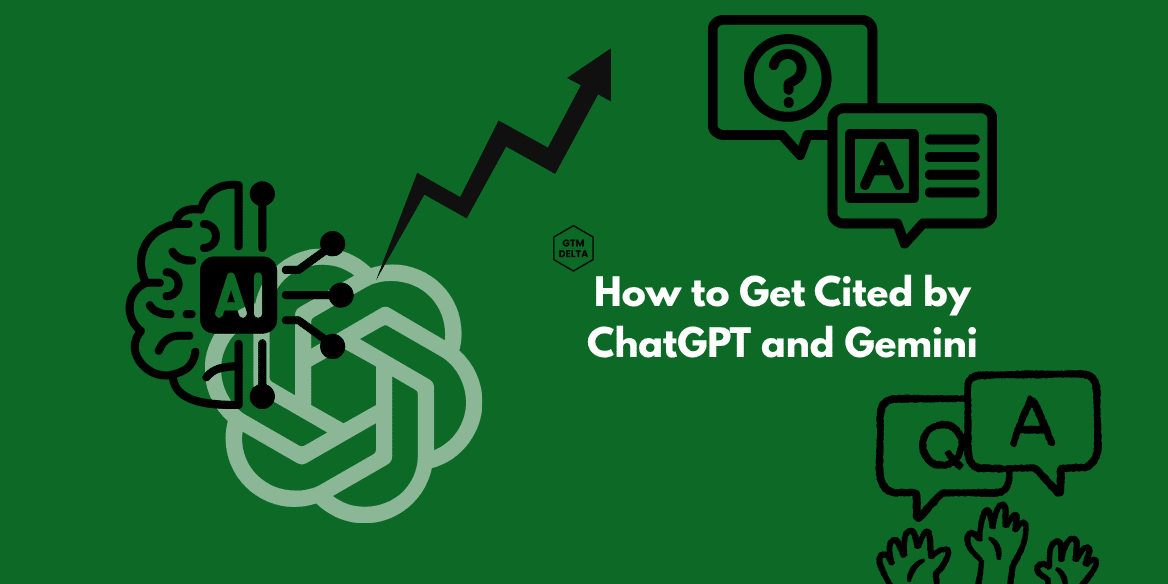
Generative Engine Optimization (GEO) is the practice of structuring and writing content so that AI-powered search engines, including ChatGPT, Gemini, and Perplexity, surface it in the answers they generate for users. Where traditional SEO optimises for ranking in a list of links, GEO optimises for being cited or summarised inside an AI-generated response.
The distinction matters because the user experience is different. In traditional search, the user sees your page title and description and decides whether to click. In generative search, the AI synthesises your content into its answer. If your content is cited, the user may never visit your page at all. If it is not cited, they will not see you exist.
What is the difference between SEO and GEO?
| SEO | GEO |
|---|---|
| Optimizes for ranking in Google’s link results | Optimizes for being cited in AI-generated answers |
| Drives clicks to your page | Drives visibility even without a click |
| Primary signal: relevance and backlink authority | Primary signal: topical authority, citability, and E-E-A-T |
| Measured by rankings, clicks, and organic traffic | Measured by brand mentions in AI answers and share of voice in generative results |
| Keyword density and on-page optimization matter | Semantic depth, direct answers, and structural clarity matter more |
| Pages can rank without being the best answer | AI systems select the most citable, authoritative, and clearly structured source |
SEO and GEO are not in competition. GEO is an additional layer that sits on top of a functioning SEO foundation, not a replacement for it.The practical implication: if your SEO foundation is weak, GEO efforts will underperform. If your SEO foundation is solid, adding GEO optimisation layers is incremental work with compounding returns.
How Semantic Search and Vector Embeddings Work
Semantic search helps AI find content based on meaning, not just keywords. When someone searches for a problem, the system looks for content that matches the intent, even if the wording is different.
What is semantic search?
Semantic search matches content using context and meaning. For example, a search for “tools for developer onboarding” can return results that explain setup guides or API integration, even if those exact words are not used.
What are vector embeddings?
Vector embeddings power semantic search. They convert text into numerical values and place it in a space where similar ideas sit close together.
When a query is made, the system compares it to this space and retrieves the most relevant content based on similarity in meaning, not exact wording.
What this means for how you write
Keyword repetition does not work in semantic search. Mentioning “semantic search AI” fourteen times tells the embedding model nothing useful about whether you actually understand the topic.
What works is semantic completeness: covering a topic from multiple angles, using related terminology naturally, addressing adjacent questions, and demonstrating genuine depth.
For the technical architecture behind this, the GTM Delta explainer on semantic search and vector embeddings in AI goes deeper on how embedding models work and what they reward.
Do Backlinks Still Matter in AI Search?
Yes, because backlinks from authoritative, topically relevant sources are evidence that credible people in your field consider your content worth citing. That evidence of citeworthiness is exactly what AI systems are trying to assess.
The shift is in which backlinks matter. The 2026 analysis of backlink effectiveness in SEO and AI search covers this in full. The core changes:
- High-volume, low-relevance profile backlinks carry significantly less weight in generative ranking than in keyword-based SEO.
- Topically relevant backlinks from authoritative sources carry more weight because they signal subject matter credibility to the AI systems evaluating your content.
- Press mentions and editorial citations, even without a followed link, increasingly influence AI systems. LLMs are trained on web content, so brands cited frequently in high-authority editorial contexts build recognition in the model’s training data.
- Educational domain backlinks remain valuable when the topical relevance is genuine, not manufactured.
The 7 Practical GEO Actions for B2B Content Teams
Each of these applies to pages you already have. Most can be implemented without writing new content from scratch.
1. Put your direct answer in the first paragraph
AI retrieval systems score content lower when the answer is buried after paragraphs of context. State the answer first. Everything after it is supporting detail.
The rewrite is straightforward: take what your conclusion currently says and move a version of it to the top. Ask yourself, “If someone read only the first paragraph, would they have a usable answer?” If not, the paragraph needs rewriting.
This improves traditional SEO, too. Featured snippet selection uses the same logic. Pages that give a direct answer near the top get selected at a significantly higher rate.
Apply to: Every how-to, what-is, and guide page on your site.
2. Add FAQ schema to pages that answer specific questions
Schema markup gives AI systems a machine-readable version of your content. The FAQPage schema tells the system this page contains questions and authoritative answers, which is exactly what generative retrieval is looking for.
- Every “what is” or “how to” page should have an FAQ or HowTo schema.
- Each answer in the schema should be 2-4 sentences: useful enough to stand alone, short enough to be cited cleanly.
- Match the question language to how your audience actually searches, not your internal terminology.
- Do not add FAQ schema to pages without actual question-answer content. Misrepresenting structure is penalised.
Start with: Service pages, persona pages, and any comparison or explainer content. To identify which pages are missing structured data, the step-by-step content audit process for B2B SEO performance includes a schema audit section.
3. Build topical clusters, not isolated pages
A single well-optimised page always loses to a domain with genuine topical depth across a cluster. In generative search, the AI explicitly tries to find the most authoritative source on a topic, not just the most relevant individual page.
How a cluster works:
- One pillar page covers the main topic comprehensively and links to all supporting pages.
- Each supporting page covers a specific sub-topic in depth and links back to the pillar.
- Internal link anchor text describes exactly what the destination page covers. AI systems read anchor text as a signal about content relationships.
Every page in a cluster should link to at least two others. Anchor text should be descriptive, not “click here” or “learn more.” The query “internal linking SEO importance 2025 or 2026” reflects exactly this growing awareness among practitioners.
On why topical authority has become the dominant ranking signal in both traditional and generative search, the origins of SEO and GEO as converging ranking disciplines cover the structural reason this shift was inevitable.
4. Demonstrate E-E-A-T with named authors and specific claims
E-E-A-T (Experience, Expertise, Authoritativeness, Trustworthiness) is a set of observable signals, not a vague brand aspiration.
- Named authors: Content attributed to a person with a verifiable online presence outperforms anonymous brand content. Two sentences establishing the author’s credentials in the topic area is enough.
- First-person experience: Specific observations from real situations signal the Experience component Google added to its framework in 2022.
- Specific, citable claims: “Founders who publish consistently for six months see significantly higher inbound inquiry rates” is citable. “Founder content drives pipeline” is not.
- External references: Citing external data, even briefly, signals the content is grounded in evidence beyond the author’s own opinion.
The practical change: Add author bylines with two-sentence credentials to your ten most important pages. This is the fastest E-E-A-T improvement available without rewriting content.
5. Optimize for semantic completeness, not keyword frequency
A semantically complete page covers a topic from enough angles that its vector embedding is rich and representative. This is what AI retrieval rewards.
The test: list every adjacent question, related concept, and logical sub-topic a knowledgeable person would associate with your target topic. Then check whether your page addresses them.
A page on “developer relations strategy” that only covers events is semantically incomplete. A complete page also addresses community building, developer content programs, champions programs, measurement, and tooling. Not at equal depth, but enough that the embedding model associates your page with the full scope of the topic.
This is also how you capture long, specific queries. The query “which component converts text into numerical vectors for semantic search” would be answered naturally by a semantically complete page. A page optimised only for the head term would not capture it.
Apply to: Your highest-impression, lowest-CTR pages. To find them and diagnose what is missing, the guide to using Google Search Console to identify content depth gaps walks through the process.
6. Keep content actively maintained with clear date signals
AI search systems prefer content that appears current, especially for rapidly evolving topics like SEO, AI tools, and B2B marketing strategy.
Freshness signals that matter:
- A visible “last updated” date on the page, separate from the publish date
- Year references in the body copy that match the current year
- The dateModified field in your Article schema, which AI crawlers read directly
- A short update note at the top when you make material changes
Review schedule: Pages on rapidly evolving topics quarterly at minimum. Update the schema dateModified field every time you make a meaningful change.
7. Test your AI search visibility before optimising anything
You cannot prioritise GEO work without a baseline. This takes 20 minutes.
- Open ChatGPT, Gemini, and Perplexity separately. They have different retrieval architectures and surface different sources.
- Search for the core problem your product solves using your buyers’ language, not your internal terminology.
- Search for your category name and your main competitors.
- Search for two or three questions your best customers asked before they bought.
Record what appears and whether your brand or content is cited. Note which competitors appear and in what context.
What your results tell you: if you appear nowhere, the priority is topical authority and E-E-A-T. If you appear inconsistently, the priority is content structure and schema. If you appear but without strong attribution, the priority is specificity and citability of claims.
Repeat monthly. AI search landscapes shift faster than traditional SERP positions.
GEO for B2B Technical Content: Two Things Worth Knowing
Technical content is already well-positioned
The content types that perform best in generative search share three properties: clear structure, specific technical claims, and demonstrable expertise. Technical documentation, architecture guides, and developer-focused content have all three. A B2B tech company with good technical content has a head start in GEO relative to companies whose output is purely marketing-voice.
The gap for most is the connective layer: strategic content that explains why a technical capability matters to a business buyer, not just how it works. Buyers evaluating both technical fit and business value simultaneously need content that speaks to both. Getting that right is where most B2B technical content programs fall short, and where GEO performance is lost.
Developer audiences are already using AI search
Developers are faster adopters of AI search tools than almost any other buyer segment. They use ChatGPT and Perplexity as research tools and evaluation aids. For B2B companies selling to developers, the GEO opportunity is larger, and the timeline is shorter than for buyers who are slower to adopt AI-assisted research.
Developer-facing content that would survive peer review from an engineer familiar with the technology, that does not use marketing language to describe technical concepts, and that acknowledges real tradeoffs rather than oversimplifying them performs best. That is also content that only people with genuine technical understanding can write credibly.
For how this connects to a broader go-to-market strategy, the GTM Delta guide to B2B go-to-market strategy in the LLM era covers the full picture of how AI is reshaping the pipeline and content together.
We help B2B tech companies build content programs that perform in both traditional search and AI-generated answers. If you want to know where your current content stands, book a 30-minute content audit call , and we’ll tell you exactly what needs to change and in what order.
How Long Does GEO Take to Work?
Schema and structure changes can improve AI retrieval within weeks. AI crawlers re-index frequently updated content faster than traditional bots, so adding FAQ schema to a page that already ranks at position five can produce measurable citation improvements within a single crawl cycle.
Topical authority takes months of consistent, high-quality content across a coherent cluster. The companies that built genuine topical depth in 2024 and 2025 have a gap advantage in 2026 that new starters will take twelve to eighteen months to close.
E-E-A-T and brand recognition in LLM training data is a two-to-three-year compounding effort. LLMs are trained on historical web content. Frequent citation in high-authority editorial contexts over time is the only route to building the brand recognition that shows up in AI answers for branded queries.
Where to Start: Prioritised by Impact Per Hour
- Audit your top ten pages by impressions. For each one, check whether the first paragraph directly answers the query the page targets. Rewrite the ones that do not. Two hours of work that improves both traditional and generative performance immediately.
- Add FAQ schema to every page targeting a specific question. Match the question language to your actual query data. Highest-ROI technical change available for most content teams.
- Run the 20-minute AI visibility baseline test across ChatGPT, Gemini, and Perplexity. Document what you find. Everything else follows from knowing where your gaps actually are.
- Audit internal links across your most important topical cluster. Every page should link to at least two others with descriptive anchor text. This strengthens both traditional SEO signals and semantic territory signals for AI retrieval.
- Add author bylines with two-sentence credentials to your ten most important pages. Fastest E-E-A-T improvement available without touching the content itself.
Work with GTM Delta
GTM Delta builds technical content programs for B2B companies that are designed to earn citations in AI search, not just rank in Google. The GTM Delta approach to SEO and demand generation combines technical depth with structural optimisation designed for generative retrieval.
The discovery call is 30 minutes. We look at your highest-value pages, run the AI visibility test live, and tell you what to fix first. Book the free audit call to get started.